SYSTEMS

How convergence works

Convergen looks at your data through many self-knowledge systems at once and focuses on what repeats. Here is how it does it and what each system is: where it comes from, who created it and what your analysis says.

CONVERGENCE

When several viewpoints point to the same thing, it is worth pausing

Each system looks at your data in its own language: a sign, a number, an archetype, an element. On its own, each one is a reading. Convergen does something more: it translates each reading into a shared set of broad life themes and looks at where they repeat.

The idea is not that one system is right, but that if several different paths lead to the same theme, that theme is a good clue for your reflection.

Your data

Name, date of birth and, if you have them, time and place. Plus four questions about what you love, what you are good at, what the world needs and what you are paid for.

One reading per system

Each system calculates its own thing with its own rules: your sign, your life number, your pillar, your archetype…

Eight shared themes

Each reading is linked to two or three of eight life themes, the ones you see below.

The convergence map

We count how many systems point to each theme. The ones that repeat most form your map and feed the synthesis.

Create & Express Lead & Guide Heal & Serve Build & Manifest Explore & Transform Connect & Harmonize Research & Go Deep Inspire & Elevate

How to read it honestly

Convergen is not a scientific test. The systems on this page are symbolic traditions: there is no empirical evidence that they predict the future or reliably measure personality traits.

Moreover, several share a date, an origin or a framework —the astrological ones start from the same sky; Nine Star Ki and Lo Shu from the same square—, so their agreement is not an independent confirmation. So as not to count the same thing twice, the Maya Sign does not vote separately from the Nahual and the Akashic Records do not vote.

Use it as a mirror to ask yourself questions, not as a verdict. It does not replace medical, psychological or professional advice.

THE SYSTEMS

Choose a system

Click a system to see what it is, where it comes from and what your analysis says. You will also see whether it is an ancient tradition or a modern creation: not everything with an ancient name is ancient.

Numbers

Numerology

Modern creation

What it is

It reduces your date of birth and the letters of your name to numbers from 1 to 9 (and the so-called master numbers: 11, 22 and 33) and gives each number a quality.

History and origin

It is traditionally credited to Pythagoras (6th century BCE), who saw order in numbers, but no method of his survives. Numerology as practised today is far more recent: it took shape in the United States in the early 20th century, with authors such as Mary Dow Balliett, and spread later through Florence Campbell and others. It is a modern tradition using an ancient language.

What your analysis says

Convergen calculates your Life Path (from the date), your Expression and your Soul number (from the name) and the number of the day you were born. Together they describe how you tend to move through life, what comes naturally to you and what your soul asks of you.
Hebrew gematria

Ancient tradition

What it is

Every letter of the Hebrew alphabet has a numerical value (aleph = 1, bet = 2… tav = 400). Gematria adds those values up to relate words and names to numbers and to other words of equal value.

History and origin

The word comes from the Greek geometria. It already appears in ancient rabbinic literature and was greatly developed in medieval Kabbalah, where it was used to look for links between passages of the Torah. Applying it to a personal name as a portrait of the person is a later and freer practice than that of the classical texts.

What your analysis says

Convergen transliterates your name into the Hebrew alphabet, obtains its value and links it to one of the 22 letters. That letter, with its symbolic meaning, is the reading: an image to think about yourself with, not a prediction.

Kabbalistic numerology

Modern creation

What it is

It combines the Chaldean system of letter values with the Kabbalistic idea that the soul has levels: Nefesh (vitality), Ruach (mind and emotion) and Neshamah (the highest part).

History and origin

The Chaldean system is attributed to ancient Babylon and became popular in the West in the early 20th century, above all through the author Cheiro. The three levels of the soul come from Jewish tradition and were developed in Kabbalah. Joining the two is a modern synthesis, not a continuous tradition.

What your analysis says

Convergen obtains three numbers from your name and date, one per level, and a Tikkun (the task of “repair” that Kabbalah attributes to each person). It describes how your drive, your mind and your deepest aspiration live together.

Lo Shu

Ancient roots, modern form

What it is

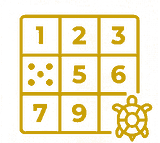
It is a square of 3×3 cells in which the numbers add up to 15 in every row, column and diagonal. It is used by placing the digits of your date of birth in it to see which numbers are abundant and which are missing.

History and origin

According to Chinese legend, it appeared drawn on the shell of a turtle that came out of the Luo River before Emperor Yu the Great. It is the basis of feng shui and of other Chinese systems. Reading it as a birth grid, with lines and “arrows” of meaning, is a more recent numerological practice, popularised mostly in the 20th century.

What your analysis says

Convergen places the digits of your date in the grid and highlights the most significant “arrow” (a complete line of three numbers). It speaks of strengths and gaps: which qualities come built in and which are worth cultivating.

Tantric numerology

Modern creation

What it is

A numerical reading with a vocabulary taken from the yoga and tantra traditions: Soul, Karmic, Gift, Destiny and Path, plus the three “minds” (positive, negative and neutral).

History and origin

It is not an ancient tradition with a documented founder. It is a modern synthesis, spread in Western yoga and personal-development circles, that mixes numerology with ideas from India. Its structure varies from one school to another.

What your analysis says

Convergen obtains these numbers from your date and name and turns them into an account of your karmic inheritance, your gifts and the direction of your path.

Calendars and birth symbols

Mayan Nahual

Ancient roots, modern form

What it is

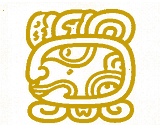
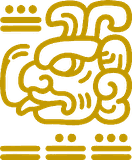
The Tzolkin is a sacred 260-day calendar that combines 20 signs (the nahuales) with 13 tones. Every day has its sign and tone; your nahual is the one of the day you were born.

History and origin

It comes from pre-Hispanic Mesoamerica. The Zapotecs and the Maya used it, and in the Guatemalan highlands Maya spiritual guides (ajq’ij) still count it today. Its spread outside Guatemala owes a lot to José Argüelles and his “Dreamspell” (1980s–90s), a reinterpreted version that does not match the traditional count.

What your analysis says

Convergen calculates your Kin (sign and tone) with Argüelles’s system. These are archetypes: they describe a kind of energy and task, not a destiny. It is worth knowing that the count differs from the one used by the Maya day-keepers.

Maya Sign

Modern creation

What it is

It is the same Kin seen with the colour names and seals of the Dreamspell (for example “Lunar Yellow Sun”): seal, tone and colour in a single label.

History and origin

The coloured-seal format was devised by José Argüelles, with Lloydine Argüelles, in the Dreamspell (1990), based on the Tzolkin. It is a modern creation inspired by the Maya calendar.

What your analysis says

It starts from exactly the same calculation as the Mayan Nahual. That is why Convergen shows its reading but counts the vote only once in the convergence map: counting it twice would artificially inflate that signal.

Celtic Tree

Modern creation

What it is

A calendar of lunar “months”, each linked to a tree (oak, birch, willow…) and to its letter of the Ogham alphabet.

History and origin

The tree horoscope is a modern creation: it rests mostly on Robert Graves’s ideas in “The White Goddess” (1948), which proposed a tree calendar tied to Irish Ogham. Historians have found no ancient druidic calendar of that form. It is a contemporary symbolic system inspired by Celtic imagery.

What your analysis says

Convergen assigns you the tree that corresponds to your date and reads it through its symbolic character (the strength of the oak, the flexibility of the willow…). It is a metaphor of temperament, not a Celtic historical fact.

Runes

Ancient roots, modern form

What it is

Runes are the signs of the ancient Germanic alphabet, also used as divination symbols. The Elder Futhark has 24 runes.

History and origin

The oldest runic inscriptions date from around the 2nd and 3rd centuries CE in northern Europe. Their use as an oracle and the pairing of one rune with each birth date are modern practices, developed mainly since the 20th century in the esoteric tradition.

What your analysis says

Convergen assigns you the rune that corresponds to your date of birth and reads it as a symbol: a theme that goes with you, with its bright side and its challenge.

Birth Tarot

Ancient roots, modern form

What it is

The Tarot has 78 cards; the 22 Major Arcana represent stages and archetypes of life (the Fool, the High Priestess, Justice, the World…).

History and origin

It was born in 15th-century Italy as a card game (the “trionfi”). Its esoteric use begins in 18th-century France with Court de Gébelin and Etteilla, and grew with the Golden Dawn and, in 1909, the Rider-Waite deck, conceived by Arthur E. Waite and drawn by Pamela Colman Smith.

What your analysis says

Convergen reduces your date of birth to one of the 22 Major Arcana and reads it as a personality archetype and a life lesson. It is a symbolic mirror, not a prediction.

Western astrology

Astrology (sun sign)

Ancient tradition

What it is

It places the position of the Sun in the zodiac at the moment of your birth. It is the “sign” everyone talks about: your core identity, your energy and your way of shining.

History and origin

The twelve-sign zodiac arises in first-millennium BCE Mesopotamia and develops in the Hellenistic world, where Claudius Ptolemy gathers its foundations in the Tetrabiblos (2nd century). The “sun sign only” horoscopes of magazines appear in 1930, when R. H. Naylor published them in the Sunday Express. Full astrology works with many more factors than the Sun.

What your analysis says

Convergen uses the Western tropical zodiac: your sun sign, its element and its style. It is only one piece; that is why it is completed with the Moon, the Ascendant and the Midheaven.

Moon

Ancient tradition

What it is

The sign the Moon was in when you were born. It is linked to emotions, needs, habits and to what makes you feel safe.

History and origin

The Moon holds a central place since the earliest Mesopotamian and Hellenistic astrologies, where it was given the body, rhythm and everyday life. In 20th-century psychological astrology (with authors such as Dane Rudhyar and Liz Greene) it is interpreted as the emotional world.

What your analysis says

Convergen calculates your lunar sign with astronomical ephemerides and reads it as your way of caring for yourself, of feeling and of reacting when nobody is watching.

North Node

Ancient roots, modern form

What it is

The lunar nodes are the two points where the Moon’s orbit crosses the Sun’s apparent path. The North Node is read as a direction of growth; the South Node, as what you already know.

History and origin

Ancient astronomers already tracked them because they mark eclipses; in Indian astrology they are called Rahu and Ketu. Reading the North Node as “the soul’s direction” is a modern approach from 20th-century evolutionary astrology (for example, that of Jeffrey Wolf Green).

What your analysis says

Convergen calculates the sign of your North Node and presents it as where you are invited to grow, with its comfort zone and its challenge.

Natal Chart and Ascendant

Ancient tradition

What it is

It is the map of the sky at the exact moment and place of your birth: the positions of the planets, the twelve houses and the angles of the chart (the Ascendant and the Midheaven).

History and origin

The natal chart in its present form took shape in the Hellenistic period (1st century BCE – 2nd century CE). Convergen uses Placidus houses, a method of dividing the sky attributed to the Italian monk and mathematician Placidus de Titis (17th century) and widely used in the West.

What your analysis says

It needs your time and place of birth. From the map, Convergen highlights the Ascendant: how you present yourself and how you perceive the world. If you ordered the full Natal Chart report you will also find the planets, houses and aspects.

Midheaven

Ancient tradition

What it is

It is the highest point of the natal chart: the sign that culminated over your head at birth. In astrology it symbolises vocation, public projection and the place you hold before others.

History and origin

It is one of the four angles of the chart since ancient astrology, with the Ascendant, the Descendant and the Imum Coeli. Hellenistic astrologers already used it to speak of career and reputation.

What your analysis says

Convergen calculates it from your time and place of birth, reads its sign and its ruler, and gives it its own entry in the convergence with a vote of three themes (most systems vote with two), because it speaks of purpose. Even so it is not destiny: it points to a direction.

Vedic astrology

Vedic Rashi

Ancient tradition

What it is

In Vedic astrology (Jyotish) the zodiac is measured against the fixed stars, the so-called sidereal zodiac. That is why your Vedic sun sign is usually the one before the sign you know in the West.

History and origin

Jyotish developed in India from late Vedic texts. Its classic reference work is the Brihat Parashara Hora Shastra, attributed to the sage Parashara and of disputed date. The system of signs (rashi) and lunar mansions is still alive today in India.

What your analysis says

Convergen calculates your solar Rashi with the Lahiri ayanamsha (the correction officially used in India) and adds its ruler. It is another way of looking at the Sun, with another tradition behind it.

Nakshatra

Ancient tradition

What it is

Twenty-seven “lunar mansions”: sectors of the sky of 13° 20’ through which the Moon passes each month. Each has a name, a deity and a symbol.

History and origin

The nakshatras appear in the oldest Vedic texts of India and are generally regarded as older than the division into twelve signs. They are still used to choose dates, names and compatibilities.

What your analysis says

Convergen calculates which nakshatra your Moon was in, in the sidereal zodiac. It gives a finer portrait of character than the sign, with its deity and its symbol.

China and Japan

BaZi — Four Pillars

Ancient tradition

What it is

“The four pillars of destiny”: the year, month, day and hour of birth become four pairs of characters (a heavenly stem and an earthly branch) according to the five elements (wood, fire, earth, metal and water), yin and yang and the twelve animals.

History and origin

Its basis —the cycle of 60 stem-and-branch combinations— has been used in China for over three thousand years. The pillar method is attributed to Li Xuzhong (Tang dynasty, 8th century), and Xu Ziping (Song dynasty, 10th century) reoriented it towards the day pillar, which remains the centre of the reading today.

What your analysis says

Convergen reads each pillar separately. Year: the environment and origins. Month: career and outward expression. Day: yourself (the “Day Master”). Hour: the inner world and what you will sow. The hour pillar requires knowing what time you were born.

Year
Month
Day
Hour

Nine Star Ki

Ancient roots, modern form

What it is

It assigns each person one of nine “stars” (1 to 9), each with an element and a direction, according to the year of birth.

History and origin

It rests on the Lo Shu square and on the Chinese feng shui of the “Flying Stars”. In its present form it developed in Japan, where it was systematised in the 20th century under the name Kigaku (“the science of the energy of the nine stars”).

What your analysis says

Convergen calculates your main star, its element (for example, Fire) and its direction (South…). It describes an underlying temperament and the setting where you tend to feel best.

Kabbalah and soul

Kabbalah — Tree of Life

Ancient tradition

What it is

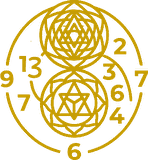
The Tree of Life is a diagram of ten spheres (sefirot) joined by 22 paths that represents the levels through which the divine expresses itself and through which a person can ascend.

History and origin

It is the central symbol of Kabbalah, the Jewish mystical thought that spreads in Provence and Catalonia in the 12th and 13th centuries and is fixed in the Zohar (late 13th). In the Renaissance and the 19th century, Christian and Hermetic occultists, such as the Golden Dawn, joined it to the Tarot and astrology.

What your analysis says

Convergen relates your life number to a sphere of the Tree (in some cases to Daath, “knowledge”) and to a Hebrew letter. It is a symbolic reading about the spiritual quality that defines you most.

Gilgul Neshamot

Ancient tradition

What it is

Gilgul is the Kabbalistic idea that souls can return in successive lives (“reincarnation” in Jewish mysticism) to complete an unfinished task, the tikkun or “repair”.

History and origin

The doctrine of gilgul takes shape among medieval Kabbalists (it is already discussed in the Bahir, 12th century) and develops in the Kabbalah of Safed in the 16th century with Isaac Luria and Chaim Vital. It is not a doctrine accepted by all of Judaism.

What your analysis says

Convergen presents you with a symbolic tikkun from your number and the sphere that corresponds to you. If you do not believe in reincarnation, read it as a metaphor for the task you feel is pending in your life.

Soul Contract

Modern creation

What it is

A symbolic reading about what your soul “came to do”, with ideas from regression therapy and past lives, inspired by the work of Linda Backman.

History and origin

Linda Backman is an American psychologist who works with past-life regression and the “life between lives”; her book “Bringing Your Soul to Light” (2009) speaks of soul contracts. That approach belongs to transpersonal psychology, not to conventional science. The calculation from the date of birth is an adaptation by Convergen, not a method of the author.

What your analysis says

Convergen combines your Life Path and your sign to write a reading about what you came to learn and to offer. Read it as a poetic hypothesis to talk with yourself about, not as a fact.

Akashic Records

Modern creation

What it is

The idea of a universal “archive” where everything lived is recorded, and from which each soul could read.

History and origin

Akasha is a Sanskrit word meaning ether or space. The notion of an “akashic record” was popularised by Theosophy in the late 19th century (Helena Blavatsky and Alfred Percy Sinnett) and later developed by Rudolf Steiner and Edgar Cayce, among others.

What your analysis says

It is worth being clear: in Convergen it is not an independent system. It is a symbolic synthesis written from the themes that repeat most in your map, which is why it does not vote in the convergence: voting would count you twice.

Purpose and character

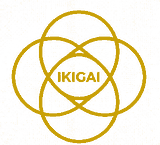
Ikigai

Ancient roots, modern form

What it is

A Japanese word that translates as “reason for being” or “what makes it worth getting up for”. In the West it is represented as the crossing of what you love, what you are good at, what the world needs and what you can be paid for.

History and origin

The word has existed in Japanese for centuries and named the joy of everyday living. The psychiatrist Mieko Kamiya studied it in the 1960s. The four-circle diagram is a Western adaptation spread around 2014, not the traditional Japanese form.

What your analysis says

Convergen asks you four questions (what you love, what you are good at, what the world needs and what you are paid for) and looks for the themes that repeat in your answers. Whoever unlocks the Convergence report also receives a personal reading written from those answers.

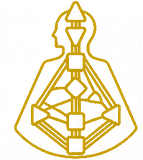
Human Design

Modern creation

What it is

A system that combines astrology, the I Ching, Kabbalah and chakras to describe your “Type” (Generator, Manifestor, Projector, Reflector…), your strategy and your authority for making decisions.

History and origin

It was spread by Ra Uru Hu (Robert Allan Krakower), who said he received it in Ibiza in 1987; he founded Jovian Archive and taught it until his death in 2011. It has no scientific validation and mixes sources of very different origins.

What your analysis says

Convergen calculates your Human Design chart from your date, time and place of birth: type, authority, profile, centres and channels. It is offered as a guide to self-observation, not as a rule.

Gene Keys

Modern creation

What it is

Sixty-four “keys” (one per I Ching hexagram) that describe three frequencies of each human quality: the Shadow, the Gift and the Siddhi.

History and origin

They were developed and spread by Richard Rudd, with a book published in 2013, drawing on Human Design and the I Ching. It is a contemporary creation with no scientific basis.

What your analysis says

Convergen calculates your main keys (your Incarnation Cross) and shows their Shadow, Gift and Siddhi: the path of turning a limiting pattern into a talent.

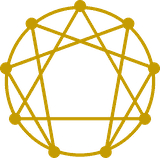
Enneagram

Modern creation

What it is

It describes nine personality patterns, each with an underlying motivation and fear.

History and origin

Oscar Ichazo formulated it in Chile in the 1960s; Claudio Naranjo brought it into psychology in the 1970s and it spread from there. Its earlier origins (Gurdjieff, Sufism) are disputed.

What your analysis says

It only appears in your report if you enter your type. Convergen does not calculate it: it takes it as you know it, and adds it to the convergence as one more voice.

Find out where your systems converge

Start with the free analysis: enter your data and see how it works with some of the systems.

Try it free →